Since 1978 · American-born amplification
Crate Amplifiers: The Guitarist’s Guide To Crate Amps
From the workshop-built CR1 to the road-tested Blue Voodoo and Vintage Club series, crate amplifiers have shaped the sound of rock, blues and metal players for over four decades. This is your one-stop resource for understanding crate amp tone, construction and value before you buy.
1978
Brand founded
100+
Amp models built
6
Signature series
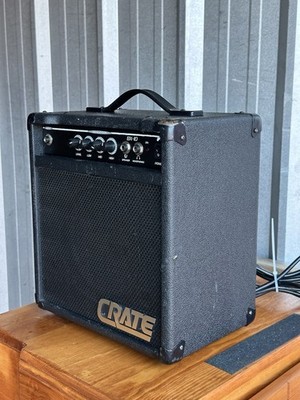
Hand-assembled tone, tuned for the stage and the studio.
Endorsed by touring musicians
Tube & solid-state models
Guitar, bass & acoustic amps
Road-tested durability
About Crate Amplifiers
A Wooden Crate That Became A Legendary Amplifier Brand
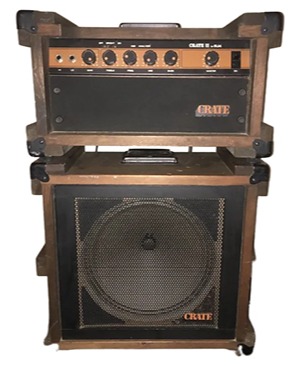
The story of Crate Amplifiers starts with a simple observation. While browsing a Crate & Barrel store in Chicago, an executive at St. Louis Music noticed how furniture was displayed inside plain wooden packing crates. That image sparked an idea: build a guitar amplifier housed in a rustic pine cabinet with military-style chest handles. The result, released in 1978, was the 10-watt CR1, the very first crate amp to reach a stage.
Demand grew quickly. By the early 1980s, the company had outgrown its original workshop and opened a dedicated manufacturing facility to mass-produce a full range of crate amplifiers for guitar, bass and keyboard players. The wooden crate look eventually gave way to traditional tolex covering, but the name, and the reputation for accessible tone, stuck.
Throughout the 1980s and 1990s, crate guitar amps became a staple on club stages and arena rigs alike, prized for a crunchy, cutting distortion that suited rock, punk and metal without the price tag of premium British amplifiers. Later decades brought digital modeling, dedicated acoustic amplifiers and all-tube series that pushed crate amplification into boutique tone territory while keeping the brand's working-musician pricing intact.
The Crate Amplifier Timeline
1978
The CR1 launches in a ponderosa pine cabinet, the first true crate amp built by St. Louis Music.
1983
A dedicated factory opens for mass production. The GTX, ECX and BX series introduce Crate's distinctive shapes and tones.
80s & 90s
Crate becomes a go-to brand for rock, punk and metal players thanks to affordable crunch and reliable distortion.
2000s – Now
Digital modeling, acoustic amplifiers and refined tube series like Vintage Club and Blue Voodoo expand the catalog past 100 models.
Why Choose Crate Amplifiers
Six Reasons Guitarists Keep Coming Back To Crate Amps
Every crate amplifier is engineered around a simple philosophy: give musicians dependable tone and rugged construction without the boutique price tag. Here is what sets crate amplification apart on stage and in the studio.
Signature Overdrive And Cleans
Crate amps are known for an iconic overdriven sound, from bluesy grit to heavy metal crunch, while still delivering crystal-clear headroom for jazz, country and acoustic playing.
Dynamic, Responsive Feel
Pick attack and playing dynamics directly shape the output of a crate amplifier. Notes bloom with complex harmonics in a way that mirrors vintage tube amp behavior.
Gig-Ready Durability
Rugged cabinet construction, protective corners and durable tolex mean a crate amp can withstand night after night of loading in and out of venues.
Working Musician Pricing
Thoughtful engineering and carefully sourced components let crate amplification stay affordable without cutting corners on tone.
Genuinely Versatile Lineup
From high-gain FlexWave heads to warm Vintage Club combos and dedicated acoustic amps, crate guitar amps cover nearly every playing style.
Simplified, Intuitive Controls
Flexible EQ, gain and master volume controls are laid out so musicians can dial in their tone quickly instead of hunting through menus.
Build Materials & Quality Control
What Goes Into A Crate Amplifier's Construction
A crate amp's reliability comes down to the materials and process behind it. Cabinets are built from plywood or solid wood, wrapped in rugged tolex covering that resists scuffs, moisture and the wear of constant transport. Corners are reinforced with protective metal or plastic caps, a detail borrowed directly from military-style road cases.
Component Selection
Tubes or transistors are chosen specifically for dynamic response, so the amplifier reacts naturally to picking technique instead of sounding flat and compressed.
Speaker Pairing
Each crate amplifier is voiced with a speaker chosen to match its intended genre, from tight low-end response for bass rigs to smooth breakup for high-gain guitar heads.
Bench Testing
Before leaving the factory, amps are run through signal and load testing to check for consistent gain staging, clean headroom and freedom from unwanted noise.
Road-Ready Design
Compact, lightweight builds make it easy to move a crate amplifier from van to venue without sacrificing tone or output.
The Crate Amp Lineup
Popular Crate Amplifier Series To Know
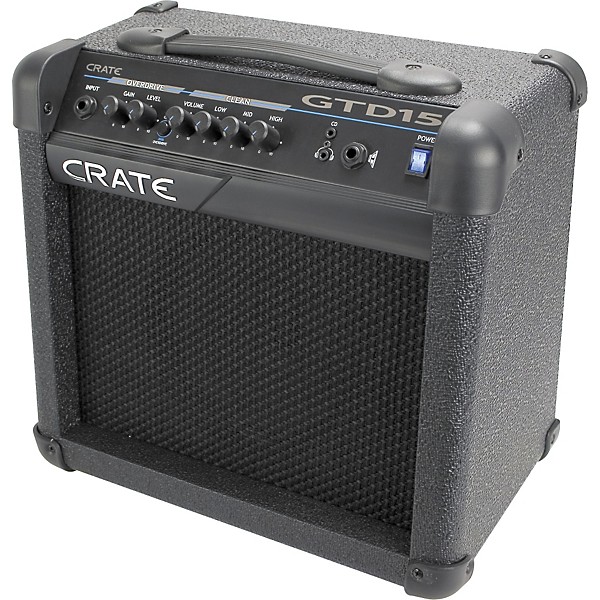
Over four decades, crate amplification has grown into a catalog covering tube warmth, high-gain distortion and clean acoustic reinforcement. These are the series most often recommended when comparing crate guitar amps.
Blue Voodoo Series
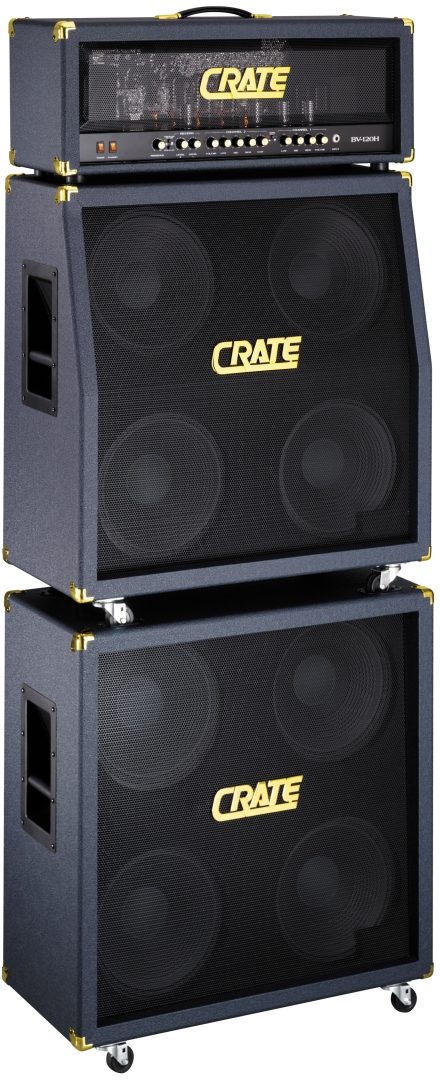
An all-tube crate amp series built for high-gain tone. The 60 and 120-watt head and combo configurations deliver saturated distortion popular with rock and hard rock players.
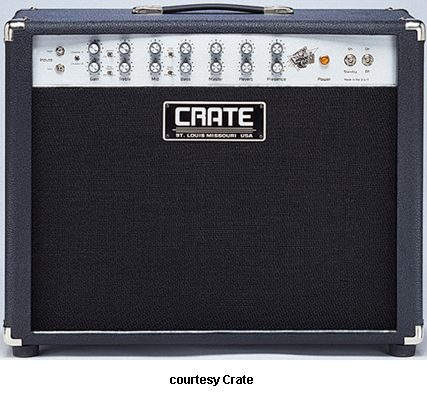
Vintage Club Series
A tube-driven crate amplifier line that pays homage to classic British and tweed-style tones, favored by blues and roots rock players for its warm, jazzy cleans.
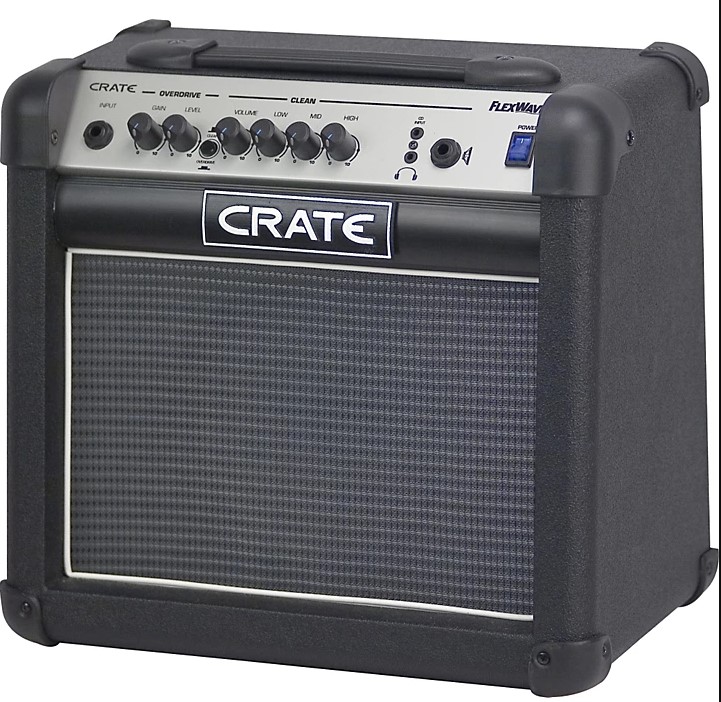
FlexWave Series
A solid-state, digitally modeled crate guitar amp series with programmable channels and onboard effects, built for modern rock and metal tone shaping.
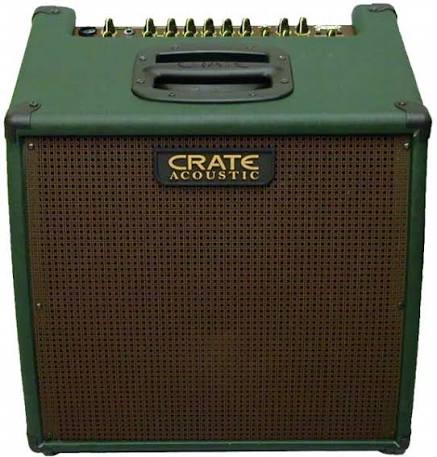
Acoustic Series
Purpose-built acoustic crate amps with wide clean headroom, multi-band EQ and XLR inputs, letting unplugged and vocal performers cut through a noisy room.
Tone & Sound Character
How A Crate Amp Actually Sounds
Tone is the reason most players choose a crate amplifier in the first place. Here is what to expect across the catalog's core sound categories.
Distortion & Overdrive
Crate amps built a reputation on punchy, cutting distortion. The gain stages are voiced to sit forward in a mix, which is why they became a favorite for rock, punk and metal players who need to be heard over a loud rhythm section.
Clean Headroom
While loved for distortion, crate amplification also delivers pristine cleans with plenty of headroom, well suited to jazz chording, country twang and acoustic performance.
Dynamic Response
A crate amplifier is designed to react to how hard or soft you play. Digging in produces natural compression and harmonic bloom instead of a flat, static signal.
Who Crate Amps Are Built For
Every Kind Of Player, One Trusted Amplifier Brand
-
Beginners: straightforward controls make a crate amp an approachable first amplifier for new guitarists and bassists.
-
Gigging musicians: road-ready cabinets and reliable electronics hold up to weekly bar and club shows.
-
Rock, punk and metal players: high-gain crate guitar amps like FlexWave and Blue Voodoo deliver cutting distortion.
-
Blues, country and jazz players: the Vintage Club series offers warm, tweed-inspired tone with generous clean headroom.
-
Acoustic performers and singer-songwriters: dedicated acoustic crate amps project vocals and unplugged instruments clearly.
On Stage With Crate
Musicians Associated With Crate Amplifiers
Across four decades, crate amps have shown up in the rigs of well-known guitarists and bassists spanning rock, metal, blues and beyond. Their use of the gear helped cement the brand's reputation on stages worldwide.
Dimebag Darrell
Pantera, Damageplan
John Fogerty
Creedence Clearwater Revival
Billy Gibbons
ZZ Top
Joe Walsh
The Eagles, James Gang
Artist associations reflect historical use of Crate gear and are not paid endorsements by this website.
Player Impressions
What Musicians Say About Crate Amps
Summarized impressions from long-time crate amplifier owners, gathered from community feedback and player discussions.
A weekend bar-band guitarist described the Blue Voodoo as ripping well beyond its price, noting that running a fuzz pedal into the front end produced a saturated distortion that stood out from anything else in that budget range, with the simple two-band EQ still leaving plenty of room to shape lead tones.
Blue Voodoo owner · Weekend gigging guitarist
An acoustic singer-songwriter said the Taos acoustic amp finally let her be heard over chatty crowds, praising the clean headroom for her dreadnought and the three-band EQ for helping her vocals cut through during solo shows.
Acoustic amp owner · Solo performer
A rock player called his Vintage Club 50 combo his favorite amp out of many he has owned, describing the all-tube British-style tone and a well-voiced EQ that yields warm, jazzy cleans when the gain is rolled back and the mids pushed up.
Vintage Club 50 owner · Rock guitarist
Buying Guide
How To Choose The Right Crate Amplifier
Comparing crate amps before you buy comes down to a handful of practical questions. Work through these before adding one to your cart.
Match wattage to your venue
A 15 to 30-watt crate amp suits bedroom practice and small rooms, while 60 to 150-watt heads are built for full band rehearsals and stages.
Tube or solid-state
Tube crate amplifiers like Vintage Club and Blue Voodoo offer classic warmth, while solid-state and FlexWave modeling amps give lower maintenance and more built-in versatility.
Consider your genre
High-gain players should lean toward FlexWave or Blue Voodoo, while blues, country and jazz players will find more headroom and warmth in the Vintage Club line.
Check portability needs
If you are loading gear in and out of venues regularly, prioritize a compact combo crate amp over a heavier full stack.
New versus used
Used crate amps from the Blue Voodoo and Vintage Club era are highly regarded by collectors; inspect tubes, pots and speaker condition before buying secondhand.
Set a realistic budget
Crate amplification is priced to compete with budget and mid-tier amps, so compare wattage and features rather than chasing the cheapest listing alone.
FAQs
Frequently Asked Questions About Crate Amps
Straight answers to the questions guitarists and bassists ask most often about crate amplifiers.
Are Crate Amplifiers still being made? +
Crate Amplifiers has gone through different ownership chapters since 1978. Original series such as the Vintage Club, Blue Voodoo and FlexWave built the brand's reputation, and used crate amps from those runs remain widely available and highly regarded by players today.
What makes crate amps different from other amplifiers? +
Crate amps are known for a dynamic, responsive feel where picking attack shapes the tone, a simplified control layout that is easy to dial in on a gig, and rugged road-ready construction, all offered at a price point that undercuts many boutique competitors.
Is a crate amplifier good for beginners? +
Yes. Crate amplifiers were built with straightforward controls and forgiving tone shaping, which is one of the reasons the brand became a first amp for so many guitarists in the 1980s and 1990s.
What genres suit crate guitar amps best? +
Crate guitar amps cover a wide range, from crunchy classic rock and metal on the Blue Voodoo and FlexWave lines to warm blues and roots tone on the Vintage Club series, plus clean headroom for jazz, country and acoustic playing.
Do crate amps hold their value on the used market? +
Well-maintained crate amps, particularly tube models like the Blue Voodoo and Vintage Club series, are sought after by collectors and gigging musicians, which helps them hold reasonable resale value compared to many budget amplifiers.
Do crate amplifiers work well for bass guitar? +
Yes, Crate built dedicated bass amplifiers and cabinets alongside its guitar lineup, tuned for tight low-end response and enough headroom to stay clean at high volume.
How do I know how old my crate amp is? +
Serial numbers changed format around 1988. Earlier units use a less standardized numbering system, while post-1988 crate amplifiers follow a system shared with sister brand Ampeg, which can help narrow down a manufacture date.
Where can I buy a crate amp today? +
New and used crate amps are commonly listed on major online marketplaces. Use the Shop Now button on this page to browse current listings.
Ready To Find Your Crate Amp?
Browse current listings for crate amplifiers, from vintage tube combos to modern crate guitar amps, and bring home a piece of amplification history.
Shop Now